
Our Expert Speakers 2026
We are finalising our set of Australian and international speakers for RVSS 2026. Below list is indicative and contains all our domestic speakers from RVSS2025.
-
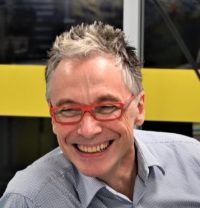
Peter Corke
Queensland University of Technology
Peter Corke is a robotics researcher and educator. He is a Distinguished Professor Emeritus at Queensland University of Technology and was the inaugural Director of the QUT Centre for Robotics. He was also the Director of the ARC Centre for Robotic Vision between 2014 – 2021. His research is concerned with enabling robots to see, and the application of robots to mining, agriculture and environmental monitoring. He created widely used open-source software for teaching and research, wrote the best selling textbook “Robotics, Vision, and Control”, created several MOOCs and the Robot Academy, and has won national and international recognition for teaching including 2017 Australian University Teacher of the Year. He is a fellow of the IEEE, the Australian Academy of Technology and Engineering, the Australian Academy of Science; former editor-in-chief of the IEEE Robotics & Automation magazine; founding editor of the Journal of Field Robotics; founding multi-media editor and executive editorial board member of the International Journal of Robotics Research; member of the editorial advisory board of the Springer Tracts on Advanced Robotics series; recipient of the Qantas/Rolls-Royce and Australian Engineering Excellence awards; and has held visiting positions at Oxford, University of Illinois, Carnegie-Mellon University and University of Pennsylvania. He received his undergraduate and masters degrees in electrical engineering and PhD from the University of Melbourne.
-
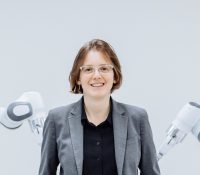
Dana Kulic
Monash University
Prof. Dana Kulić conducts research in human–centred robotics, focusing on human–robot interaction, interactive robot learning and human motion analysis. Her career includes research at the University of Tokyo on robot learning from demonstration, and a decade at the University of Waterloo, where she built a leading group in human-robot interaction and assistive systems. Since 2019, she is the Director of Monash Robotics and a Professor in the Faculty of Engineering at Monash University. She is an ARC Future Fellow, a CSIRO Adjunct Science Fellow and the Deputy Director of the ARC Centre for Optimised Ageing. She studies how robots can learn from and respond to human behaviour to collaborate safely and effectively in real-world settings, from healthcare and rehabilitation to industrial and everyday environments.
-
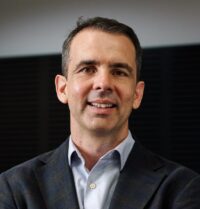
Simon Lucey
University of Adelaide
Simon Lucey (Ph.D.) is a professor in the School of Computer Science at the University of Adelaide, where he is the Director of the Australian Institute of Machine Learning (AIML). Prior to this he was an associate research professor at Carnegie Mellon University’s Robotics Institute (RI) in Pittsburgh USA. From 2017-2020, he was a principal scientist at the autonomous vehicle company Argo AI and spent time at the CSIRO (2009-2014). He has received various career awards including an ARC Future Fellowship (2009-2013). Simon’s research interests span computer vision, machine learning, and robotics. He enjoys drawing inspiration from AI researchers of the past to attempt to unlock computational and mathematic models that underlie the processes of visual perception.
-
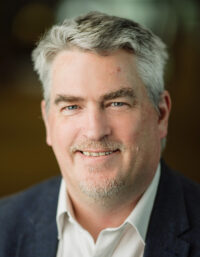
Tom Drummond
University of Melbourne
Professor Drummond is based at the University of Melbourne. He studied a BA in mathematics at the University of Cambridge. In 1989 he emigrated to Australia and worked for CSIRO in Melbourne for four years before moving to Perth for his PhD in Computer Science at Curtin University. In 1998 he returned to Cambridge as a post-doctoral Research Associate and in 1991 was appointed as a University Lecturer. In 2010 he returned to Melbourne and took up a Professorship at Monash University. His research is principally in the field of real-time computer vision (ie processing of information from a video camera in a computer in real-time typically at frame rate), machine learning and robust methods. These have applications in augmented reality, robotics, assistive technologies for visually impaired users as well as medical imaging.
-
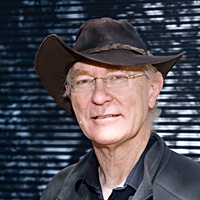
Richard Hartley
Australian National University
Richard Hartley is an Emeritus Professor with the ANU College of Engineering, Computing and Cybernetics. Richard is renowned as one of the founders of the field of multi-view geometry in computer vision – his text has received over 28,000 citations. Richard has been ANU since January 2001. He was also the Program Leader for the Autonomous Systems and Sensor Technology Program of NICTA. Richard worked at the General Electric Research and Development Center from 1985 to 2001, where he became involved with Image Understanding and Scene Reconstruction working with GE’s Simulation and Control Systems Division. This division built large-scale flight-simulators. Professor Hartley’s projects in this area were in the construction of terrain models and texture mosaics from aerial and satellite imagery. From 1995 he was GE project leader for a shared-vision project with Lockheed-Martin involving design and implementation of algorithms for an AFIS (fingerprint analysis) system being developed under a Lockheed-Martin contract with the FBI. This involved work in feature extraction, interactive fingerprint editing and fingerprint database matching. In 2000, he co-authored (with Andrew Zisserman) a book for Cambridge University Press, summarizing the previous decade’s research in this area. (Over 60,000 citations and an h-index of 78).
-
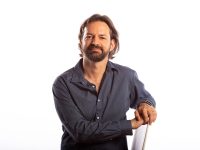
Thierry Peynot
Queensland University of Technology
Associate Professor Dr Thierry Peynot is a robotics researcher and academic with expertise in sensor data fusion, computer vision, perception, and the autonomy of unmanned ground vehicles, especially when operating in unstructured environments and challenging environmental conditions. He is a Chief Investigator of the Queensland University of Technology (QUT) Centre for Robotics, where he leads the Space Robotics and Mining Robotics activities. He is also Chief Investigator of the Australian Robotic Inspection and Asset Management (ARIAM) ARC Research Hub, and of the ARC Training Centre in Automated Vehicles in Rural and Remote Regions (AVR3). He has led multiple research programs funded by government, research institutions and industry, including mining (e.g. Caterpillar, Komatsu, Mining3), Defence (e.g. BAE Systems, Rheinmetall) and Space (e.g. with Boeing, ELO2 and CSIRO), developing robust perception technology for robots and autonomous vehicles that can function despite adverse environmental conditions. He currently leads QUT’s contribution to the first Australian rover to be sent to the moon: Roo-ver, and has led the development and establishment of the largest covered lunar testbed facility in Australia: QUT’s Yandiwanba. -

Sue Keay
The University of New South Wales
Dr Sue Keay is an expert in robotics, AI and automation. She is the Director of the UNSW AI Institute and founded Robotics Australia Group, the peak body for the robotics industry. With a background in science and a passion for cutting-edge technologies, Sue has led successful initiatives that bridge the gap between research and practical applications. Her expertise lies in leveraging robotics, AI and automation to solve complex challenges across various sectors. Sue is a fellow of the Australian Academy of Technology and Engineering (ATSE), a member of the Kingston AI Group and Chief Executive Women, and serves on numerous advisory boards, including the board of the computer vision start-up, Visionary Machines. Sue holds an MBA from The University of Queensland Business School, a PhD in Earth Sciences from ANU and is a Graduate of the Australian Institute for Company Directors.
-
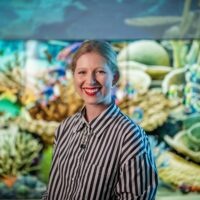
Scarlett Raine
Queensland University of Technology
Dr Scarlett Raine is a Lecturer in the QUT School of Electrical Engineering and Robotics, and a Chief Investigator in the QUT Centre for Robotics. In her research, Scarlett is pioneering the use of computer vision and artificial intelligence to analyse underwater images and help monitor marine ecosystems more efficiently. She brings her expertise to the Reef Restoration and Adaptation Program as a Chief Investigator on the Transition to Deployment sub-program, where she is developing an AI-driven Reef Guidance System for automated re-seeding of temperature-resilient coral babies to degraded reefs. She completed her PhD in 2024 on the topic of Weakly Supervised Segmentation of Underwater Imagery, and was recognised with the Executive Dean’s Commendation for Outstanding Doctoral Thesis Award. Scarlett is motivated by data-constrained and weakly-labelled problems, and automated analysis of challenging real-world field data, with a particular focus on the conservation of marine ecosystems.
-

Previous International Speakers
2025
Yulia Sandamirskaya (ZHAW Zurich University of Applied Sciences)
Dimity Miller (Queensland University of Technology)
Donald G Dansereau (University of Sydney)
Feras Dayoub (University of Adelaide)2021
Hanna Kurniawati (Australian National University)
Gamini Dissanyake (University of Technology Sydney)
Fabio Ramos (University of Sydney)2020
Tobi Delbruck (ETH Zurich and The Institute of Neuroinformatics, Zurich)
Stefan Leutenegger (Imperial College London)
Donald Dansereau (University of Sydney)2019
Laura Leal-Taixé (Technical University of Munich)
Seth Hutchinson (Georgia Institute of Technology)
Jose Neira (University of Zaragoza)
Silvere Bonnabel (Mines ParisTech)
Tarek Hamel (University of Nice Sophia Antipolis)2018
Margarita Chli (ETH Zurich)
Vincent LePetit (University of Bordeaux)
Yarin Gal (University of Oxford)
Andrea Cherubini (University of Montpellier)2017
Davide Scaramuzza (University of Zurich)
Simon Lucey (Carnegie Mellon University)
Javier Civera (University of Zaragoza)
Sebastien Rougeaux (Seeing Machines)2016
Frank Dellaert (Georgia Institute of Technology)
Jana Kosecka (George Mason University)
Paul Newman (University of Oxford)2015
Raquel Urtasun (University of Toronto / Uber)
Andrew Davison (Imperial College London)
Fredrik Kahl (Chalmers University of Technology)
Lourdes De Agapito Vicente (University College London)