-
Tobias Fischer
Acting General Chair
Queensland University of Technology
Dr Tobias Fischer (www.tobiasfischer.info) conducts interdisciplinary research at the intersection of intelligent robotics, computer vision, and computational cognition. His main goal is to develop high-performing, bio-inspired computer vision algorithms that simultaneously examine animals/humans and robots’ perceptional capabilities. Since January 2022 Tobias has been a Lecturer in the QUT Centre for Robotics. He joined QUT as an Associate Investigator and Research Fellow working with Professor Michael Milford in January 2020. Previously, Dr Fischer was a postdoctoral researcher in the Personal Robotics Lab at Imperial College London. He received a PhD from Imperial College in January 2019. Tobias’ thesis was awarded the UK Best Thesis in Robotics Award 2018 and the Eryl Cadwaladr Davies Award for the best thesis in Imperial’s EEE Department in 2017-2018. He previously received an M.Sc. degree (distinction) in Artificial Intelligence from The University of Edinburgh in 2014 and a B.Sc. degree in Computer Engineering from Ilmenau University of Technology, Germany, in 2013. His works have attracted two best poster awards, one best paper award, and he is the senior author of the winning submission to the Facebook Mapillary Place Recognition Challenge 2020.
-
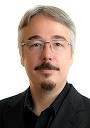
Donald G Dansereau
University of Sydney
Dr Donald Dansereau is a senior lecturer in the School of Aerospace, Mechanical and Mechatronic Engineering, and the Perception Theme Lead for the Sydney Institute for Robotics and Intelligent Systems. His work explores how new imaging devices can help robots see and do, encompassing the design, fabrication, and deployment of new imaging technologies. In 2004 he completed an MSc at the University Calgary, receiving the Governor General’s Gold Medal for his pioneering work in light field processing. In 2014 he completed a PhD on underwater robotic vision at the Australian Centre for Field Robotics, followed by postdoctoral appointments at QUT and Stanford University. Donald’s industry experience includes physics engines for video games, computer vision for microchip packaging, and chip design for automated electronics testing.
-
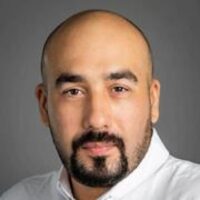
Feras Dayoub
University of Adelaide
Dr Feras Dayoub is an Associate Professor at the Australian Institute for Machine Learning (AIML), Adelaide University, working in autonomous perception, machine learning, and robotic vision. His research focuses on developing trustworthy perception systems that enable autonomous robots to operate reliably in real-world environments. He leads the Embodied AI and Robotic Vision Group and serves as Co-Director of the French-Australian CROSSING Lab (CNRS IRL). -
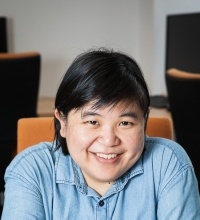
Hanna Kurniawati
Australian National University
Hanna Kurniawati is a Professor at the ANU School of Computing and holds the SmartSat CRC Professorial Chair for System Autonomy, Intelligence & Decision-Making. Hanna’s research spans robotics, decision-making under uncertainty, motion planning, computational geometry applications, integrated planning and learning, and reinforcement learning. Her works on scalable methods for planning under uncertainty, esp. under the Partially Observable Markov Decision Process (POMDP) framework, have received multiple recognitions, including a best paper award at ICAPS’15, a finalist for the best paper award at ICRA’15, and the RSS’21Test of Time Award. She is a keynote speaker at IROS’18, ICRA’25, and ICAPS’25. Hanna was President of the Australian Robotics and Automation Association 2019-2020, a Senior Editor of IEEE RA-L, the Award Chair of CoRL’22, a Program Co-Chair of ICRA’22, and is an Editor of IEEE TRO.
-
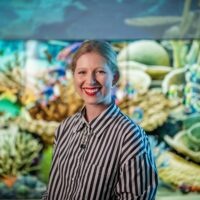
Scarlett Raine
Queensland University of Technology
Dr Scarlett Raine is a Lecturer in the QUT School of Electrical Engineering and Robotics, and a Chief Investigator in the QUT Centre for Robotics. In her research, Scarlett is pioneering the use of computer vision and artificial intelligence to analyse underwater images and help monitor marine ecosystems more efficiently. She brings her expertise to the Reef Restoration and Adaptation Program as a Chief Investigator on the Transition to Deployment sub-program, where she is developing an AI-driven Reef Guidance System for automated re-seeding of temperature resilient coral babies to degraded reefs. She completed her PhD in 2024 on the topic of Weakly Supervised Segmentation of Underwater Imagery, and was recognised with the Executive Dean’s Commendation for Outstanding Doctoral Thesis Award. Scarlett is motivated by data-constrained and weakly-labelled problems, and automated analysis of challenging real-world field data, with a particular focus on conservation of marine ecosystems.
-
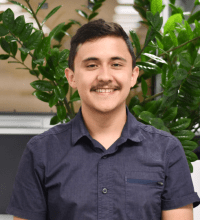
Nicolás Guillermo Marticorena Vidal
Queensland University of Technology
Nicolás received his B.S. degree in Electrical Engineering in 2020 and a Professional Degree in Electrical Engineering from the Universidad de Chile in 2021, after writing his thesis titled “Mobile manipulation through Deep Reinforcement learning”. His Primary interests lie in scene understanding and visual learning, mainly in the topic of scene representation and how these representations could be used in the training of complex tasks. His experience in robotics comes mainly from his participation in the Robocup@Home teams UChile Homebreakers and UChile Peppers.
-
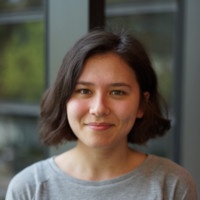
Jennifer Wakulicz
The University of Sydney
Jennifer Wakulicz is a Postdoctoral Research Associate at the Australian Centre for Field Robotics, University of Sydney. She received her PhD at the University of Technology Sydney Robotics Institute in 2024. Her research interests include uncertainty and state estimation, information theory, and active perception. Her research focuses on developing sparse belief representations that facilitate efficient, uncertainty-aware planning.
-
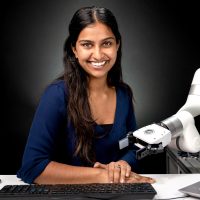
Therese Joseph
Queensland University of Technology
Therese is a robotics researcher focused on robust localisation and navigation in challenging environments. She is the Lead Research Engineer on the iMOVE-funded Trusted Transport Positioning System, developing resilient alternatives to GPS for transport applications in degraded or GNSS-denied settings. She is a PhD candidate at Queensland University of Technology, with work spanning bio-inspired navigation models, LiDAR-based localisation in unstructured forest environments, and event-based place recognition for extreme lighting conditions. She holds a Bachelor of Engineering in Mechatronics (First Class Honours) and is interested in alternative sensing and computation approaches for reliable autonomy where traditional GPS and vision fail.
-
Niko Sünderhauf
Queensland University of Technology
Professor Niko Sünderhauf is Deputy Director (Research) of the ARC Research Hub (ITRH) in Intelligent Robotic Systems for Real-Time Asset Management and Chief Investigator and member of the Executive Committee of the QUT Centre for Robotics (QCR). Niko conducts research in robotic vision, at the intersection of robotics, computer vision, and machine learning. His research interests focus on scene understanding and how robots can learn to perform complex tasks that require navigation and interaction with objects, the environment, and humans.
-
Dimity Miller
Queensland University of Technology
Dimity is a Chief Investigator with the QUT Centre for Robotics, and a Lecturer with the QUT School of Electrical Engineering and Robotics. She obtained her PhD in 2021 from QUT, which was recognised by an Executive Dean’s Commendation for Outstanding Doctoral Thesis Award in 2022. Her research expertise is in reliable robotic vision – operating at the intersection of deep learning, computer vision, and robotics. In particular, she is passionate about understanding when and why computer vision models may fail in robotic applications, and developing techniques to mitigate this. Her research interests span across topics including uncertainty estimation, object detection, continuous learning, deep learning introspection, metrics for assessing model performance, and spatiotemporal learning.